What Is Torah? The Instruction of The Almighty for Covenant Life
What is Torah and why is it important
TORAH STUDY
Gordon Hayes
7/9/20264 min read
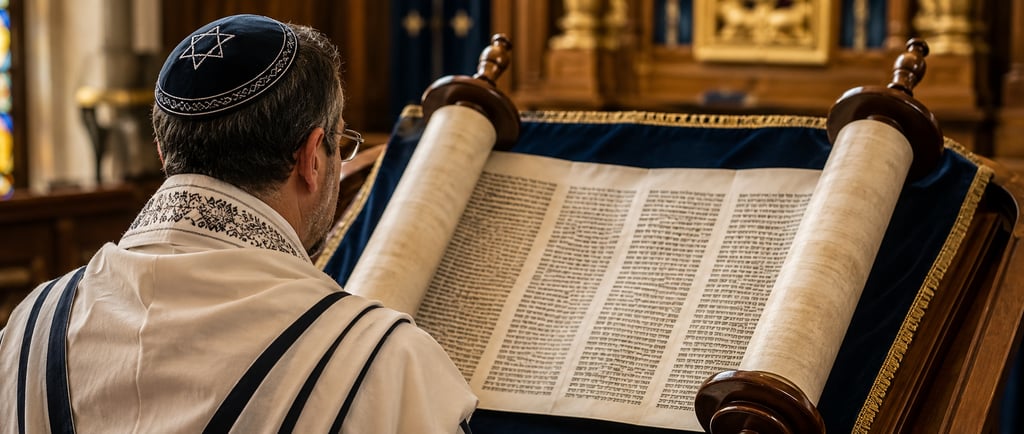
The Hebrew word Torah is תּוֹרָה (torah). It is often translated “law,” but the word is richer than that. It is connected with the Hebrew root ירה (yarah), meaning to teach, instruct, direct, or point the way.
Torah is not merely a legal code. It is the instruction of The Almighty, given to teach His people how to walk before Him.
In its narrow sense, Torah refers to the first five books of Scripture: Genesis, Exodus, Leviticus, Numbers, and Deuteronomy. In a broader sense, Torah expresses the revealed instruction of The Almighty: His wisdom, commandments, covenant standards, and way of life.
Psalm 19 says, “The Torah of Adonai is perfect, restoring the soul.” Torah was given for life, wisdom, holiness, justice, mercy, worship, family, community, and covenant faithfulness.
Torah Was Given to Israel and Heard by a Mixed Multitude
When Israel came out of Egypt, they did not leave alone. Exodus 12:38 says a “mixed multitude” went up with them. At Sinai, The Almighty was forming Israel as a covenant people, but His instruction was never meant to be hidden from the nations.
Exodus 12:49 says, “The same law shall apply to the native as to the stranger who sojourns among you.” Numbers 15:15-16 teaches one statute and one ordinance for Israel and the stranger who joins himself to them.
Israel was called to be “a kingdom of priests and a holy nation” (Exodus 19:6). A priestly nation represents The Almighty before the world and teaches the world His ways. Deuteronomy 4:6 says the nations would see Israel’s wisdom through the Torah and say, “Surely this great nation is a wise and understanding people.”
That calling was never erased. Isaiah 2:3 says, “For the Torah will go forth from Zion and the word of Adonai from Jerusalem.”
Why Israel Has Often Been Guarded Rather Than Missionary
We should speak carefully here. The Jewish people have not failed because they lacked a calling. Much of history forced them into survival.
For centuries, Jewish communities were persecuted by non-Jewish powers: forced conversions, expulsions, public disputations, restrictions, ghettos, blood libels, inquisitions, pogroms, and the Shoah. Much of this persecution came from people claiming to represent “Christian” faith.
Because of this, Jewish communities often became protective rather than outward-facing. They had to preserve Torah, family, worship, language, and identity under pressure. In many places, they were legally forbidden or socially endangered if they appeared to draw others toward Judaism.
So, while Israel was called to be a light to the nations, history often placed Israel in a defensive posture. That should humble those of us from the nations who now seek to learn Torah. We are not replacing Israel. We are joining ourselves to the God of Israel and learning from the Scriptures entrusted to His people.
Not Every Commandment Applies to Every Person
A common objection says, “If you believe in Torah, then you must keep all 613 commandments.” But no one has ever kept every commandment personally, because not every commandment applies to every person.
Some commandments apply to men. Some to women. Some to parents. Some to judges. Some to kings. Some to farmers in the Land. Some to Levites. Some only to priests. Some only to the High Priest. Some only when the Tabernacle or Temple is standing.
Even Yeishua did not personally perform every commandment. He was not a Levitical priest serving at the altar. He was not a woman. He was not a husband or father. He did not observe commandments that were not assigned to him. Yet he was sinless because he obeyed perfectly what applied to him.
Torah observance does not mean pretending every commandment applies to us. It means faithfully walking in the commandments, principles, and instructions that do apply.
Some Commandments Cannot Be Observed Today
Certain parts of Torah cannot be practiced now because the required conditions do not exist. This is especially true concerning the Levitical priesthood, sacrifices, altar, Tabernacle, and Temple service.
The Torah does not permit sacrifices wherever we choose. Deuteronomy 12 teaches that offerings were to be brought to the place The Almighty chose. Deuteronomy 16:5-6 specifically says the Passover sacrifice was not to be offered in any town, but at the place The Almighty chose to establish His Name.
That means offering sacrifices today, including a Pesach lamb or kid, would not be Torah obedience. It would violate Torah, because we have no functioning Temple altar and no authorized Levitical priesthood service.
We can remember Pesach. We can remove leaven. We can teach our children. We can rehearse the Exodus. We can gather for a memorial meal. But we cannot invent our own sacrificial system and call it obedience.
Common Christian Objections
Some say, “We are not under law but under grace” (Romans 6:14). But Paul immediately asks, “Shall we sin because we are not under law but under grace? May it never be!” Grace frees us from sin’s mastery, not from obedience to The Almighty.
Some say, “The law was nailed to the cross.” But Colossians 2:14 speaks of the record of debt against us, not the destruction of The Almighty’s Torah. Paul says the Torah is “holy and righteous and good” (Romans 7:12).
Some say, “Yeishua fulfilled the Law, so we no longer keep it.” But Yeishua said he did not come to abolish the Torah or the Prophets (Matthew 5:17-19). If our definition of “fulfill” causes us to abolish what he said not to abolish, our definition is wrong.
Some say, “Acts 15 proves Gentiles do not need Torah.” Acts 15 gave beginning requirements for Gentiles turning to The Almighty. Then James added that Moses was read in the synagogues every Shabbat (Acts 15:21). The assumption was continued learning, not permanent ignorance.
Torah Through the Teaching of Yeishua
Yeishua did not teach Torah as empty rule-keeping. He taught the heart of Torah: love for The Almighty, love for neighbor, mercy, justice, faithfulness, humility, and truth.
He rebuked hypocrisy, man-made traditions, and outward religion without inward obedience. But he never taught lawlessness. In Matthew 23:23, he said the weightier matters of Torah should be practiced “without neglecting the others.”
A Torah life shaped by Yeishua produces peace and stability. It gives individuals rhythm, boundaries, identity, and purpose. It gives communities shared standards for worship, justice, mercy, family life, and holiness.
Torah shows us the path. Yeishua teaches us how to walk it rightly.
May we study carefully, obey humbly, and live as people whose lives reflect the wisdom, mercy, justice, and holiness of The Almighty.
Contact
Questions or thoughts? Reach out anytime.
Phone
gordon.hayes@torahwithgordon.org
+1 (325) 721-9304
© 2026. All rights reserved.